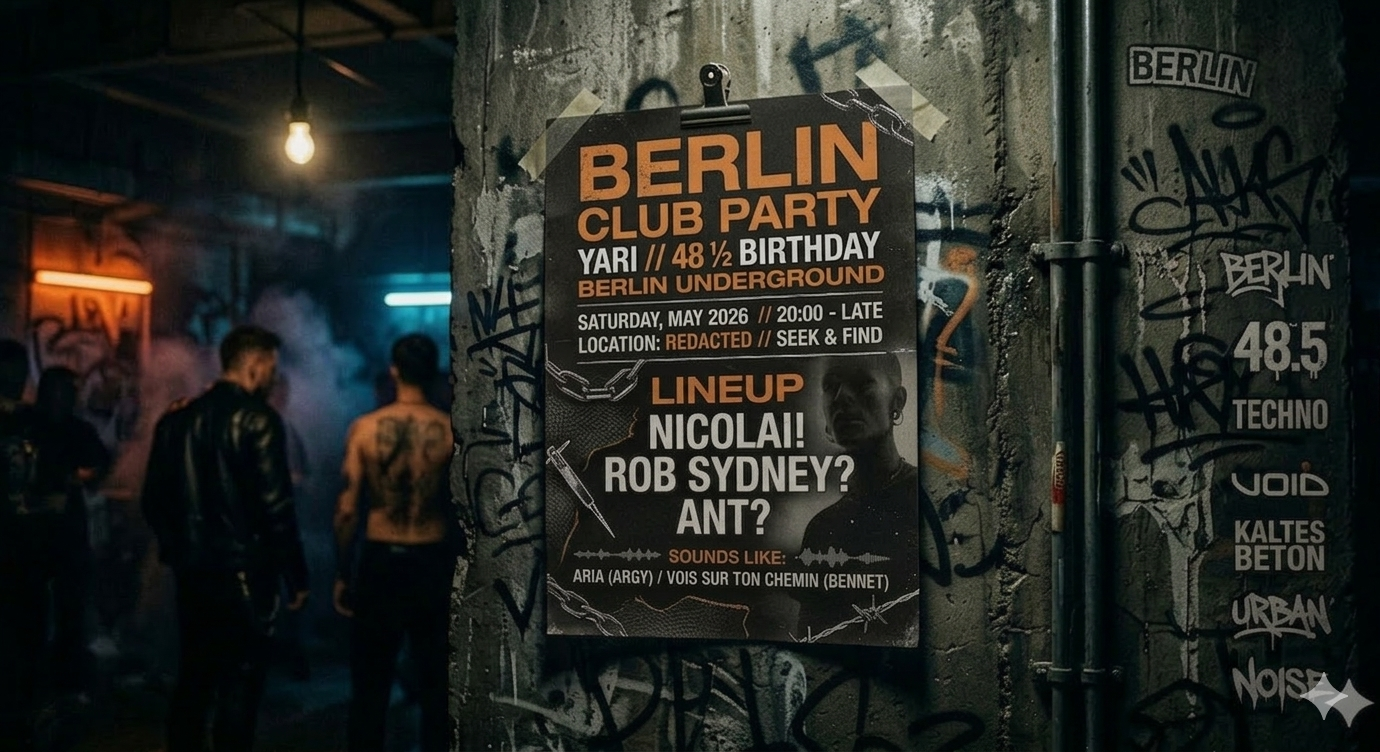
A Berlin-style underground rave. Private party. Big sound. Dance all night. Until very late.
08
Wind of Change — The Scorpions
Three months before the Berlin Wall fell, Klaus Meine sat on a boat cruising down the Moskva River, watching Soviet soldiers and KGB agents escort the world's biggest rock bands to play 120,000 fans at the Moscow Peace Festival. He started writing.
The Wall came down in 1989. The song wasn't released until 1991, but it became the soundtrack to a generation breaking free from the USSR.
There's a podcast with a theory the CIA paid the Scorpions to write the song to speed up the fall of the USSR.
No Stasi tonight. Just music. Let's dance.
07
Club Culture
When the Berlin Wall fell in 1989, the city was left with hundreds of abandoned buildings and empty factories. Within months, young Berliners had turned them into illegal clubs. No curfew. No rules. No closing time.
Techno was the soundtrack, and they partied for days. Berlin took the genre born in Detroit and made it darker, slower, more hypnotic. Clubs like Tresor, E-Werk and Ostgut defined the sound. Berghain, Kit Kat Clubs continue it today.
The door policy that seems harsh from outside exists to protect something rare - a room where people shed social norms and be whoever they want.
06
DARK
HOT
LOUD
05
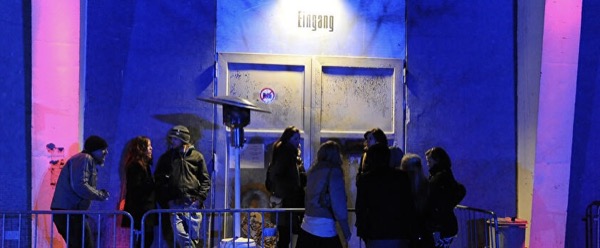
THE DOOR
There is a strict door policy. No one knows what it is.
Prepare to queue. And queue. And queue.
Our bouncer trained under Sven Marquardt — the man on Berghain's door since 1998, whose answer to "How do I get in?" is simply: Zero.
The standards are high. Entirely subjective. Even regulars only get in about 80% of the time.
What helps: knowing the DJ's name. Being interesting. Not trying.
04
Nicolai K CONFIRMED
Underground DJ Nicolai K is making a rare one-off DJ appearance.
He may play in German.
03
02
The Legend of Techno Viking
Filmed during a Berlin techno rave in 2000, here we meet Techno Viking, a global icon of techno culture. His name was never known, and millions watch his video every year on the same day.